This year I returned to Codegarden as in person attendee, with the conference taking place in a new(old) location.
Having missed Codegarden 2024 & 2025 during maternity leave, this year was my return to Umbraco Codegarden's flagship event. The biggest change was the location, a return to Copenhagen for the first time since 2015. As my first year attending was 2016, this was all new to me. My first observation was how much bigger the venue was and, dare I say, "grown up" conference venue - still with the Umbraco sprinkles of fun and magic.
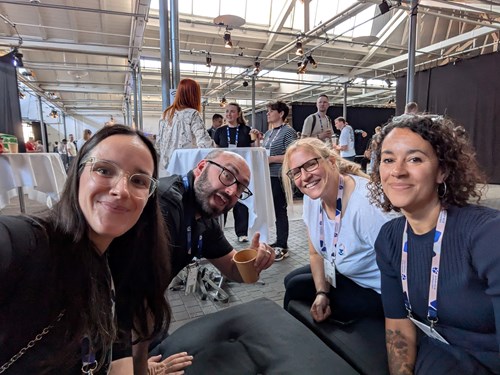
The magic always includes the community vibe, different to many other tech events. From when you walk in the door, sit beside someone you haven't met before during a talk or catch up with some long term pals over some lunch - the welcome and inclusion is special.
This theme of being more grown up continued throughout - starting with the keynote(s). The first with Emma (VP of Dev Rel) and Mads (CEO) giving an over view of Umbraco, mainly from community perspective - the scale of the contributions and reach of community is very impressive. For me, it's been interesting to see how the shift in community contributions has been at hackathons and beyond over the last 10 years as HQ has grown it's own team, previously it was bug fixes and pull requests from community that were most valuable, now it is shout outs to how many impressive packages have been built. The benefit to Umbraco has always been not just the core product, but an active ecosystem so seeing this thriving and being supported by Umbraco HQ is reassuring.
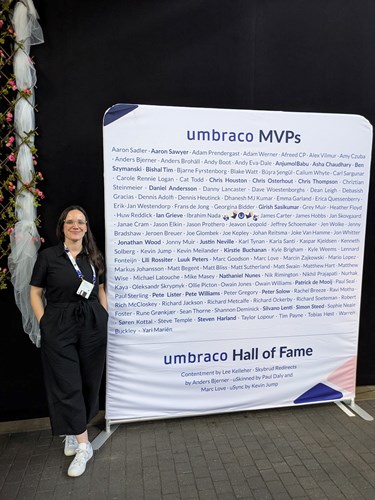
During the keynote the Umbraco MVPs were announced, with 25 new MVPs announced and 102 renewed. I was lucky enough to be on this list again, for the 10th time. This never gets old and seeing the amazing work done by MVPs always inspires me - not all contributions are the same, with everyone bringing their own unique way of making the community and ecosystem stronger.
Next up was Filip (CTO) with some of his team for the product keynote showing what's new and in progress in the core CMS and commercial products. A standout announcement that I think took many by surprise was Umbraco Automate - with Open Source repos and public roadmaps it's hard to pull of a surprise but well done team Umbraco. This feature with drag and drop interface (think Power Automate) and easy to configure triggers & actions out the box, I can see this being an immediate hit for developers and CMS users. Follow up blog on this to come!
Let's not let this takeaway from another big discussion point, we have been waiting a long time for, which is Elements in Umbraco. Elements allow for "create content once, reuse it everywhere" stored in a new "Library" section in CMS. This is something myself and most Umbraco developers I know have created their own way of doing for a long time - having it natively in the CMS partially in 18 and rolled out by 19 is a gamechanger for both developer and editor experience.
How I have got this far without saying AI in a summary of a tech conference in 2026, I don't know, but of course AI was a recurring thread throughout the 2 days. It has been interesting to watch how Umbraco has embedded AI into it's strategic roadmap with it's key principals: "AI on your terms", "modular AI experience", "everywhere Umbraco is" - this was brought to life in the product keynote and throughout the main stage talks including Bolette Kern's session "Umbraco CMS in the Age of AI: One strategy, two tracks, and the CMS foundation", Phil Whittaker's "Umbraco in AI" and Matt Brailsford's "AI in Umbraco" talks. If you get a chance to watch these sessions, I absolutely would recommend.
Umbraco in AI is how to utilise your content and Umbraco functionality where you are already interacting with AI - your LLM agent of choice. I have been experimenting with the existing developer MCP but it's great to see how much further is planned and how an agentic approach with Umbraco is possible. The Umbraco AI skills are currently in progress (more info here), the content modelling and implementation's are coming later this year and will be useful for those getting started in Umbraco as well as us who have been working for a long time - doing things in a consistent way. I like the simple explanation from the docs on MCP vs agent skills - "Skills provide knowledge, MCP provides capability".
AI in Umbraco is where we use AI functionality within the CMS - out the box with or custom utilising Umbraco.AI package. This has been available for a while now but it was great to see it come to life with a example demo from Matt with in detail code and configuration examples. This also included AI functionality within Umbraco Automate actions which is very cool and I can already see use cases for.
To end day 1, I was part of a live podcast panel - a collaboration between us at Candid Contributions and Jamie Taylor from the Modern .NET Show. We discussed how AI is changing things (not always for the better) for Open Source maintainers. This will be up on both podcast feeds soon!
As well as all the sessions from HQ on the product releases and roadmap, there were several other tracks of really impressive talks from community members and wider tech industry. The event being all in one large venue made it easy to get to all sessions and all being recorded means less FOMO when you miss one session while attending another.
The classic Codegarden magic was there between all these more typical tech conference sessions - Yoga with the CEO, bracelet making and meditation with Mette. Not to mention the very unique Umbraco awards and bingo entertainment accompanying dinner each evening.
Overall, I feel the return to Copenhagen was a great success for Codegarden - more accessible and room to get even bigger next year. Well done team Umbraco 👏 As always, I leave with a list of tech to investigate and boosted motivation for even more community involvement over the next year til we meet again!